





See All
Preferences
My Communities
My Discussions
My Email Digests

I urge all of you to read this article. Notice from the title there are other places one can get lymphedema - not just the arm!
You should be aware of the symptoms especially if you have had radiation.
http://www.stepup-speakout.org/breast_chest_trunckal_lymphedema.htm
JudyView Thread

In the face down position, the breast hangs down and onlt the breast is irradiated from both sides not from the top down, thereby protecting the chest, ribs, heart and lungs. Most places do not want to do this as the table set up is different than the supine (face up) position - but it does better protect the chest area.
As far as radiation burns to the breast, the prone position cannot avoid that as the breast is still being irrafdiated.
I had my radiation in the prone position and found that position comfortable - the position was not a problem for me. Not everyone is a candidate for the prone position - but make sure to ask -it is better for protecting your chest and underarm.
JudyView Thread

BREAST CANCER GUIDELINES
I. Diagnosis
II. Find a Breast Surgeon and/or Plastic Surgeon, and/or Radiation Oncologist
A. Mastectomy (skin and/or nipple sparing mastectomies)
with possible reconstruction at the time of surgery or post operative.
There are different kinds of breast reconstruction using your own
muscles, tissue and skin such as TRAM flap, DIEP flap, SIEA flap,
and Latissimus dorsal with an implant. Reconstruction can also be
done using implants. If that is what you are considering you
might also want to consult with a plastic surgeon prior to surgery to
know your options.
B. Lumpectomy is another option and with this option you have radiation. You might want to consult a Radiation Oncologist prior to surgery to know your options.
1. One option is known as internal radiation (also called brachytherapy) and can be done at the time of the lumpectomy or within a few weeks of the surgery. This is also known as Accelerated Partial Breast Radiation. This is done using a balloon type device that is put in the lumpectomy cavity which allows the radiation to be delivered to the site within catheters. This usually is done twice a day for 5 days. Even though radiation takes place after chemo (should you need chemo), if you wait to consult the radiation oncologist after you finish chemo, you will probably not have the option of doing brachytherapy and will only have the option of external beam radiation.
2. External Beam radiation includes IMRT — Intensity Modulated Radiation Therapy and 3D-CRT — 3 dimensional conformal radiotherapy.
3. The standard external beam radiation is the one that takes place every weekday for five to seven weeks. Most external beam radiation is done in the supine (face up) position. Definitely ask about having radiation possibly done in the prone (face down) position.
III. Find a Medical Oncologist
A. Chemotherapy is usually done (if needed) after surgery and prior to radiation (adjuvant), sometimes it can be done first (neo-adjuvant) to shrink the tumor. The oncologist might recommend a DNA test be done on the tissue from the tumor to see if you would benefit from chemotherapy. The name of that test is the ONCOTYPE DX test and it determines the % chance of recurrence of your specific type of breast cancer over the next 10 years. You should discuss this with your oncologist to see if this test is feasible for you and if your insurance company will pay for it.
B. Hormone Therapy is prescribed by a medical oncologist if your breast cancer is estrogen/progesterone positive or HERS2 positive
IV. There are many decisions and choices that you may have to consider if you have been diagnosed with breast cancer. I would strongly recommend that you discuss these options with your surgeon, plastic surgeon and radiation oncologist prior to your surgery, to help you make the right decision for you. Not all breast cancer patients are candidates for each of the above mentioned options, and not all surgeons are trained to perform these new procedures. So you need to educate yourself so you can ask your doctor questions about these procedures and their ability to perform them. Also these are the treatment procedures as of 2010 and are always changing - so do research to remain up to date on new breast cancer treatments.
JudyView Thread

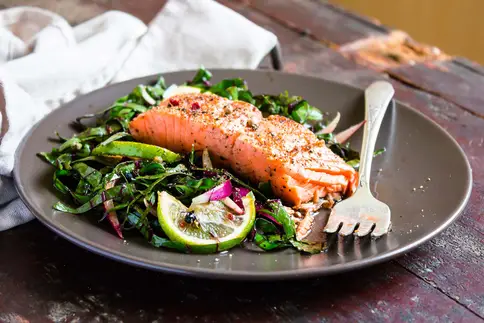
I decided to deal with it by taking care of myself ( I am 67 yrs. old) and following what my body told me as far as how much I could do and when to rest. I also changed my eating habits. I ate 6 small meals a day and made sure each one had lots of lean protein, and fruits and vegetables. And most importantly drink lots and lots of water. No fast food and no fatty foods. I also ate lots of soups.
I also made sure to plan ahead for each chemo. After the first chemo I tracked the days I did not feel too good and then made sure to leave those days open for each subsequent chemo. Since my treatments were 3 weeks apart I made sure to get everything done like cooking, laundry, shopping etc. a day or two before the next chemo so I could spend the needed days after the chemo resting and recuperating.
It is doable if you allow yourself to slow down and let friends and family pitch in where and when you want them to. Put your needs first during this time and let others take care of you. Do not feel guilty if you are tired and have no energy - that is one of the side effects of chemo.
I wish you good luck and think positively aboutthe chemo. I did a little visualization each time I had my chemo. I visualized the chemo being little Pac Man things devouring the cancer cells, and that made me smile!
Please let us know how you are doing.
JudyView Thread

http://www.webmd.com/breast-cancer/news/20101217/breast-conserving-therapy-better-than-mastectomy ?
This is a very informative short article that all of us should read as many friends and family members come to us to ask our opinions, and at least we should be knowledgeable about the newest research.
JudyView Thread

JudyView Thread
See Related Women's Health Communities
Women's Health Newsletter
Find out what women really need.
Other Breast Cancer Information
- Breast Cancer Health Center
- Caregiving Member Community The support and understanding you need!
- Exercise & Nutrition After Breast Cancer Surgery
-
More Related Communities
The opinions expressed in WebMD User-generated content areas like communities, reviews, ratings, or blogs are solely those of the User, who may or may not have medical or scientific training. These opinions do not represent the opinions of WebMD. User-generated content areas are not reviewed by a WebMD physician or any member of the WebMD editorial staff for accuracy, balance, objectivity, or any other reason except for compliance with our Terms and Conditions. Some of these opinions may contain information about treatments or uses of drug products that have not been approved by the U.S. Food and Drug Administration. WebMD does not endorse any specific product, service, or treatment.
Do not consider WebMD User-generated content as medical advice. Never delay or disregard seeking professional medical advice from your doctor or other qualified healthcare provider because of something you have read on WebMD. You should always speak with your doctor before you start, stop, or change any prescribed part of your care plan or treatment. WebMD understands that reading individual, real-life experiences can be a helpful resource, but it is never a substitute for professional medical advice, diagnosis, or treatment from a qualified health care provider. If you think you may have a medical emergency, call your doctor or dial 911 immediately.
Health Solutions From Our Sponsors
©2005-2013 WebMD, LLC. All rights reserved.
WebMD does not provide medical advice, diagnosis or treatment. See additional information.