


See All
Preferences
My Communities
My Discussions
My Email Digests

If you're really committed to high-level fitness, which is certainly our hope, light exercise is a key component of your workout plan. Ideally, you're looking at four days a week of hard exercise -- two of strength training, and two of hard aerobics -- as the base of your program, and then two days a week of very light, long duration exercise, like a long walk or easy bike ride. An hour of this light exercise will keep you on track for your fitness goals while giving your body a chance to actively recover from the hard days.
Even if you're not serious about exercise (yet!), light exercise plays a wonderful role in promoting your overall health. Nobody has done truly high-quality studies, but data suggest that walking is, mile for mile, as good for your long-term cardiovascular health as running. ("Mile for mile" is very different than hour for hour. Walking three miles is the same as running three miles, but walking a half hour is definitively not the same as running a half hour).
So, if you are aiming for good physical and mental health, but simply can't get yourself into the harder exercise groove, shoot for walking an hour a day, or the equivalent in any other form of light exercise, and you will have done yourself a world of good.View Thread

But here's some good news: Beauty really is more than skin-deep. Lots of research shows that we care primarily about facial expressions, mobility, and the physical expression of mood and emotion, more than about the static appearance of our bodies. What this means is that if you are lively, energetic, and have a youthful spirit, nobody will really notice your skin. They will be attracted to the twinkle in your eye.
Bottom line: No one is losing sleep over your wrinkles -- you shouldn't either. So, instead of getting tied up in knots about a wrinkle here or there, maybe you should focus on the activities and people that keep that twinkle in your eye.View Thread

Portion size is the easiest place to make a win here. One very powerful suggestion is simply to get appetizer-size plates and use those for breakfast, lunch, and dinner. If you have a small enough plate, you can load it full, and you will still be about right on calories.
Studies have shown over and over again that if you have a big plate, you will tend to put more food on it, and it is awfully tough to walk away from an unfinished meal!View Thread

Luckily for us, that is simply not true! Our bodies are made of living tissue, of cells, and the hallmark of cells is that they are always renewing themselves. Most of the cells in your body actually replicate themselves over and over again. Those that don't, such as many of your brain and heart cells, simply keep repairing themselves internally day after day throughout your life.
When you combine all of the replacement and repair work, it turns out you are replacing or renewing about 1% of your body every day. Your blood cells live a few months, your taste bud cells a few hours, but everything is always engaged in this ongoing renewal process.
Even your bones are completely turned over every few years. In fact, you are walking around today on legs that are largely new stuff in the past three months, and in another three months you will be walking around on a whole new set of legs again.
So don't think of yourself as a rusting car. Think of yourself as a living, endlessly renewing organism.
That's the good news. The bad news is that your cells can come in every day either a little bit stronger or a little bit weaker, depending on what you do. If you live a life of inactivity, gluttony, and boredom, your cells will actually come in weaker. We call this decay. As a culture, it's become an assumption that this is a normal consequence of aging, but actually most of it is optional biological decay.
Truth is, we're choosing between "stronger" and "weaker" with every decision we make about what we eat, how much we exercise, and how we relate to other people. If you step up to the plate and treat your body right, with some good solid exercise, decent nutrition, a few less calories, and some meaning and purpose to your life, the cells come in stronger and stronger over the course of time.
That is why we called the book Younger Next Year , because it's possible. And wouldn't we all like to be younger next year?View Thread

There is an extensive body of medical research, extending back over the past few decades, showing a close link between emotional state and health. Depression, for instance, increases your risk of vascular diseases such as heart attack and stroke, cancer, and dementia. Of course the inverse is true as well, which is that more life satisfaction, and especially more contact with friends, family, and community involvement, reduce the risk of all these. For a quick look at this fascinating and important area of science, get Dean Ornish's book, Love and Survival, which does a nice job outlining the data.
Loneliness is probably the worst form of emotional stress, followed by toxic relationships at home or work. The good news, of course, is that good relationships, good work environments, and social connections all move your inner chemistry (and therefore the health needle) just as far in the good direction.
Have you been able to successfully minimize the emotional stress in your life? What steps have you taken to get to a healthy place?View Thread

We take dental health for granted now, but both gum disease and tooth decay are major problems of aging, and largely preventable. Gum disease is a misery. Increasingly it has been correlated with heart disease, though whether it is causative or just a correlation remains unclear. But regardless of how gum disease may affect other areas, the problems of expensive, painful, and protracted dental work -- and the chance of ending up in dentures -- is certainly enough to prompt action.
Flossing and regular brushing both have their role, but review the techniques with your dental hygienist next time you go in for a check-up. Brushing too hard with a stiff bush can actually damage your gums, and the flossing is to remove the particles from between your teeth, not to saw into your gums and cause bleeding! A soft tooth brush and regular preventive visits to your dentist are your best option.
Oral health is a frequently overlooked component of your long-term basic health strategy, but some preventative attention now will pay off in the long run. As much as you will want to smell the roses later in life, eating the fresh corn growing beside them will be even better!View Thread

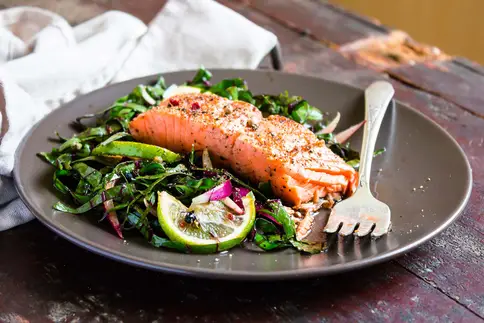
One easy strategy is to try to get as many different colors of fruit and vegetable on your plate as you can at each meal, as the colors coincide with different chemical makeups within each plant. It is the overall concept of having plants of all types form the bulk of your calorie consumption that leads to long-term health (and then reducing that calorie consumption to sane levels!)View Thread


Since it is actually hard for a lot of people to find the energy to get off the couch and go to bed, my suggestion to a lot of my patients has been to set an alarm for the time that you would really like to get into bed, and a separate one for the time you need to get up. Most people need between 7 and 9 hours of sleep, depending on individual genetics, and to some degree, life stress. Most people know intuitively what their ideal amount of sleep is. My suggestion: Go for three weeks getting that amount every single night, see how you feel, and then make a decision about how to live your best life.View Thread

A longer life means more planning -- and I don't just mean your finances. Money is important, of course. Maybe you'll hold a part time job to keep more money in the bank. But your plan for your latter years should also include staying fit, vigorous, and strong. Not only will this minimize your health care costs. It will maximize your ability to live your life on your own terms.
Be sure to foster some solid social connections, both up to and during your retired years. Connecting with your family, friends, and other people in your community has been proven to work wonders for your vitality and health.
George Vaillant wrote a wonderful book called Triumphs of Experience, about the Harvard Grant Study on life trajectories. This study tracked the lives of a group of men from the 1930s -- when they were college sophomores -- all the way up to their 90s. One of the things the study showed was that love and social connections are the most important predictors of long-term happiness.
So I can't stress it enough! Make sure you stay connected with the world and the ones you love. And commit real time to those people and the things that interest you most.
Now, with that said, what plans are you making for retirement?View Thread
See Related Women's Health Communities
Women's Health Newsletter
Find out what women really need.
Other Women's Health Information
More Related Communities
The opinions expressed in WebMD User-generated content areas like communities, reviews, ratings, or blogs are solely those of the User, who may or may not have medical or scientific training. These opinions do not represent the opinions of WebMD. User-generated content areas are not reviewed by a WebMD physician or any member of the WebMD editorial staff for accuracy, balance, objectivity, or any other reason except for compliance with our Terms and Conditions. Some of these opinions may contain information about treatments or uses of drug products that have not been approved by the U.S. Food and Drug Administration. WebMD does not endorse any specific product, service, or treatment.
Do not consider WebMD User-generated content as medical advice. Never delay or disregard seeking professional medical advice from your doctor or other qualified healthcare provider because of something you have read on WebMD. You should always speak with your doctor before you start, stop, or change any prescribed part of your care plan or treatment. WebMD understands that reading individual, real-life experiences can be a helpful resource, but it is never a substitute for professional medical advice, diagnosis, or treatment from a qualified health care provider. If you think you may have a medical emergency, call your doctor or dial 911 immediately.
Health Solutions From Our Sponsors
©2005-2013 WebMD, LLC. All rights reserved.
WebMD does not provide medical advice, diagnosis or treatment. See additional information.