See All
Preferences
My Communities
My Discussions
My Email Digests
Announcements
WebMD Privacy Policy Changes Coming -- Please Read!
What's Happening Now
. I have a checkup in a few weeks and will discuss this with my Dr. I was hoping someone on here could educated me beforehand, I feel silly not knowing this.View Thread
I thought that I had gone through most of the menopausal symtoms after the surgery which was pretty brutal. Now however, I have the whiskers to tweeze and hot flashes that just hit me recently. The wonky ovary I have left has a cyst on it but the obgyn refused to remove when he took the other one. I am very sensitive to hormone replacement (that is what led to the other ovary being removed).
My question, since I have experienced some symtoms of premature menopause. How long can I expect to deal with the effects of the wonky ovary finally petering out? and what, if any, treatment is available to me that doesnt require hormone replacement?View Thread
Lookin for that Cure as well !!View Thread
Also - any thoughts to other types of birth control after - we do not want a surprise baby at this point LOLView Thread
Thank you again for your response.View Thread
Sorry to hear about all you have been going through; and indeed you are very young to be doing all this. If indeed you also have some thyroid issues like Hashimotos, you may be one of the few women who go through menopause because of antibodies to your ovaries (this is very unusual, but possible)-I would suggest you consult with a reproductive endocrinologist who is an expert in menopause (names are available through the North American Menopause society, menopause.org); you can also consult with the medical school nearest to you, and speak with their gynecology department about who you should see there. (those are also the folks who will be able to counsel you about pregnancy)
You do need to be on hormone therapy now-but there may be some possibilities to "wake up" your ovaries.
Good luck,
Mary JaneView Thread
Menopausal symptoms are quite variable. Hot flashes do tend to get better, in a 2-4 year period. However, alas, about 15% of women have significant hot flashes even 10 years after their last menstrual period. Vaginal dryness can get worse, the further into menopause that you get. However, there are both non hormonal moisturizers like Replens, and prescription vaginal estrogens which are quite safe and useful as well.
Make sure you are getting in calcium (most folks recommend 1200 mg a day) and vitamin D (1000 units a day) and lots of good exercise.
Do speak with your health care provider if you are having annoying symptoms,
Good luck,
Mary JaneView Thread
Have you tried to cut down your dose of estrogen? If you want you could cut your estradiol 2 mg in half, to get 1 mg; see if you feel OK (from a point of view of no increased hot flashes) (they also make 1 mg tablets if this works out for you) . Sometimes cutting the dose of estrogen will help with breast discomfort. If you do well on the 1 mg dose, after a while, you could cut those in half, and see if that is any further improvement for the sore breasts. And of course, keeping caffeine down, and taking vitamins E, B6, and evening primrose oil may help.
Good luck,
Mary JaneView Thread
It's a struggle. Not that I'm whining or anything. But until I turned 41, I never knew what my older sisters and my mother were going through. Now I have a new respect for all of them.View Thread
My nipples are softer but still erect?View Thread
These aren't classic symptoms-the major relationship that I could think of is that surges of hormones, common in the perimenopausal transition, could lead to fluid retention, which can be associated with vertigo-if there is a question on the relationship to hormonal fluctuations, we can shut down the ovaries with some fancy hormones, and see if symptoms resolve-but these aren't classical symptoms.
Good luck,
Mary JaneView Thread
This situation sounds a bit confusing-I'm really not sure of what has been happening to you-these symptoms are not classically menopausal, and I think there are several things going on. Never a bad idea to get a second opinion in a complex situation-
Good luck,
Mary JaneView Thread
Most likely this is just perimenopause-you have to go a full year without a period to be termed fully menopausal. However, do check in with your care provider-(s)he may want to check up on the lining of your uterus, just to make sure there isn't any overgrowth (hyperplasia) or polyps in there. But most likely, this is perimenopause-and 20% of women get no hot flashes, but we don't know why those folks are so luck, and others get terrible ones-I hope they don't bother you!
Good luck,
Mary JaneView Thread
Indeed, this could be just some ovarian activity, which we have been talking about with some other members. But, given that it's been several years without a period, most gynecologists would encourage you to investigate the lining of the uterus, either with an ultrasound or an endometrial biopsy, just to make sure the lining of the uterus isn't the culprit,
Good luck,
Mary JaneView Thread
Shouldn't be a problem -this is nothing that needs to be dealt with immediately-and flying shouldn't bring on any major issue-hope it will turn out to be nothing but the result of some more ovarian activity,
Good luck,
Mary JaneView Thread
Endometrial Hyperplasia
Post back and let us know what you find out. Hope it's nothing serious!View Thread
I have always had quite an uneven nipple surface since feeding four children.
Sometimes during a surge of hormones what looks like a little tiny swelling, like a clear bubble, will appear on the top of an individual nipple bud. This can get irritated by clothing and will affect both sides at different times, and on occasions will change from a clear little bubble to red to black- like a tiny blood blister in the end, and then will heal as the surge dies down and the nipple returns to normal.
It feels when up like a little bud on the tip of the nipple and it stands higher than the remaining structures around it and is only sore when clothing brushes against it. I have tried not sleeping on my tummy as I think this makes this worse and wearing loose clothing. It affects both sides at different times and in different places on the nipple, but always during a period when the breast swells. Luckily only one at a time though and only every few months!
I have no lumps or other breast rashes or symptoms. The skin on the nipple looks normal and healthy and there is no dryness or eczema.
I wonder if any ladies have experienced this as I had a similar thing when pregnant and breastfeeding. Also can the expert advise about this.
I am 52 now and still having cycles but they are getting slightly more irregular- some 44 says and some 22 days. I am also experiencing hot flushes at night.
I also have CFS/ME and as this affects my sleep. I will often crash out in one position at night for hours, and of course this can be on my tummy which doesn't help with the breast issues!View Thread
Although gynecologists do point out that hot flashes do tend to get better over the course of time, hot flashes can persist for many years. About 15% of women still get significant hot flashes 10 years post menopausal-there was a really nice article in the journal Obstetrics and Gynecology (you can check out some of the info on line) by an excellent researcher named Ellen Freeman from the University of Pennsylvania discussing just these issues almost exactly one year ago.
With the upcoming summer, try to stay cool-
Good luck,
Mary JaneView Thread
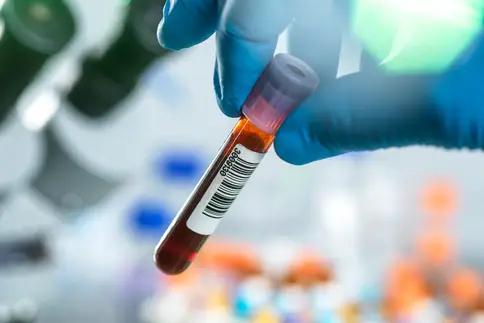
The most likely explanation is that you are heading into menopause. This is one situation that a blood test to check an FSH and estrogen level could be quite helpful-although it will not guarantee that you will never get another period, it will show if you are heading into menopause.(See some of the other comments posted today)
Good luck,
Mary JaneView Thread
Very difficult to interpret lab tests without context. However, the most likely explanation is that you are perimenopausal. While are ovaries are quite active, unless you happen to catch one peak day during the cycle when they peak up, you seldom see an FSH over 20. However, this does not necessarily mean that you are done with periods. You can even have an FSH of 50, and a month later, get a period-because your ovarian function fluctuates a lot during perimenopause. But the likeliest explanation with these tests would be that you are heading towards menopause.
Good luck,
Mary JaneView Thread
See Related Women's Health Communities
Women's Health Newsletter
Find out what women really need.
Featuring Experts
Helpful Tips
Helpful Resources
Related News
Related Drug Reviews
- Drug Name User Reviews
Report Problems to the
Food and Drug Administration
You are encouraged to report negative side effects of prescription drugs to the FDA. Visit the FDA MedWatch website or call 1-800-FDA-1088.
For more information, visit the North American Menopause Society website
Other Menopause Information
More Related Communities
The opinions expressed in WebMD User-generated content areas like communities, reviews, ratings, or blogs are solely those of the User, who may or may not have medical or scientific training. These opinions do not represent the opinions of WebMD. User-generated content areas are not reviewed by a WebMD physician or any member of the WebMD editorial staff for accuracy, balance, objectivity, or any other reason except for compliance with our Terms and Conditions. Some of these opinions may contain information about treatments or uses of drug products that have not been approved by the U.S. Food and Drug Administration. WebMD does not endorse any specific product, service, or treatment.
Do not consider WebMD User-generated content as medical advice. Never delay or disregard seeking professional medical advice from your doctor or other qualified healthcare provider because of something you have read on WebMD. You should always speak with your doctor before you start, stop, or change any prescribed part of your care plan or treatment. WebMD understands that reading individual, real-life experiences can be a helpful resource, but it is never a substitute for professional medical advice, diagnosis, or treatment from a qualified health care provider. If you think you may have a medical emergency, call your doctor or dial 911 immediately.
Health Solutions From Our Sponsors
©2005-2012 WebMD, LLC. All rights reserved.
WebMD does not provide medical advice, diagnosis or treatment. See additional information.